


Coping with Bipolar Disorder: Finding Stability
Imagine waking up and finally knowing exactly which version of yourself will greet the day. For many, the reality of life is a constant, exhausting vigil against the next unexpected shift in mood. You might feel the weight of strained relationships or the quiet frustration of a medication routine that doesn't quite feel right yet. It's deeply unsettling to feel like a passenger in your own mind, but finding effective coping strategies for bipolar disorder can help you move from a state of constant defense to one of steady, predictable growth.
You deserve to feel understood and supported as you seek a life that isn't defined by the next episode. This guide provides practical, science-backed skills and professional insights designed to help you reclaim your emotional agency and improve your daily functioning. We will explore how combining intentional self-monitoring with expert psychiatric care creates a foundation for lasting stability. From understanding how the 2026 TALK SAFE Act impacts telehealth access to the benefits of a non-judgmental psychiatric evaluation, you'll find the tools needed to start your new path to health today.
Table of Contents
Understanding the Foundation of Bipolar Coping
Coping isn't just about surviving a crisis; it's about building a life where crises happen less often. When we talk about coping strategies for bipolar disorder, we're describing a proactive defense system designed to soften the impact of mood cycling. Many people start by being reactive, only reaching for tools when they feel the familiar pull of a depressive "low" or the buzzing energy of a "high." While that's a natural place to start, true stabilization happens when you shift your focus to prevention. By establishing a baseline of wellness before the storm hits, you give yourself the best chance at a balanced life.
A deep Understanding Bipolar Disorder reveals that this condition isn't a single, static experience. Because your brain chemistry and life circumstances are unique, a generic, one-size-fits-all approach usually fails. Effective care relies on the principle of neuroplasticity. This is the brain's remarkable ability to reorganize itself by forming new neural connections. Every time you choose a stabilizing habit over a chaotic impulse, you're literally retraining your brain to find its center. Over time, these small, consistent actions become the structural support for long-term wellness.
Bipolar I vs. Bipolar II: Tailoring Your Strategy
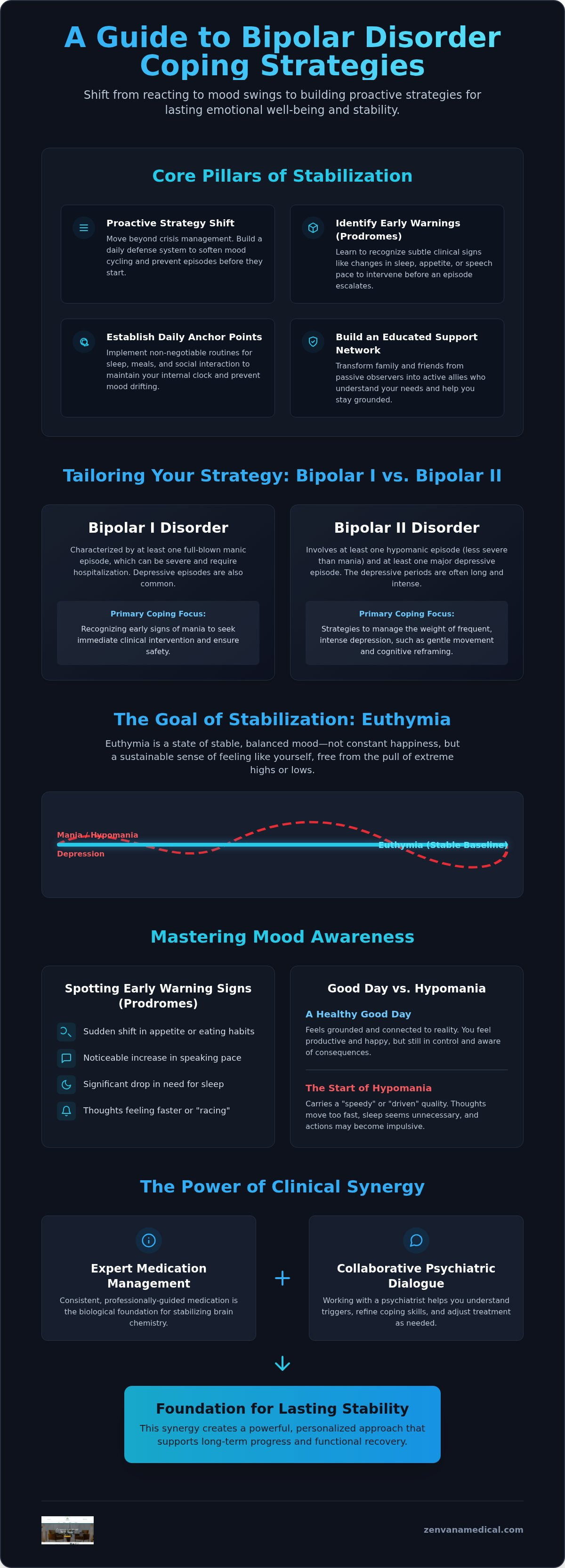
Your specific diagnosis dictates the tools you'll need in your daily toolbox. If you live with Bipolar I, your coping skills might focus heavily on recognizing the early signs of full-blown mania, which can require more immediate clinical intervention to ensure safety. Conversely, those with Bipolar II often deal with hypomania and more frequent, lingering periods of intense depression. The "weight" of this depression requires strategies that prioritize gentle movement and cognitive reframing. Whether you're managing intense highs or persistent lows, your roadmap starts with a personalized psychiatric evaluation to identify your specific triggers and needs.
The Goal of Stabilization: Beyond Just "Feeling Better"
In clinical terms, the ultimate goal of treatment is euthymia. This is a state of stable, balanced mood where you aren't being pulled toward either extreme. It's not about being "happy" all the time, but about feeling like yourself again. As you develop your coping strategies for bipolar disorder, it's helpful to set realistic, functional goals. This might mean maintaining a steady job, reconnecting with friends you've distanced yourself from, or simply feeling a sense of agency over your mental health. Stabilization is an incremental process, and every small victory is a step toward reclaiming your life.
Mastering Mood Awareness and Early Warning Signs
Your memory can be a deceptive narrator when your mood begins to shift. When you're in the depths of depression, it feels like you've always been there; when you're soaring, the risks of the past seem irrelevant. This is why objective data is a cornerstone of effective coping strategies for bipolar disorder. According to the NIMH on Bipolar Disorder, tracking symptoms helps clinicians and patients identify patterns that memory might miss. Whether you prefer the tactile feel of a paper journal or the convenience of a digital app, the goal is consistency. You aren't just recording feelings; you're hunting for "prodromes." These are the subtle, clinical precursors, like a sudden shift in your appetite or a slight increase in your speaking pace, that signal a change is coming.
Distinguishing between a genuinely good day and the start of hypomania is a skill that takes time to develop. A healthy good day usually feels grounded and connected to reality. In contrast, hypomania often carries a "speedy" or "driven" quality. You might notice your thoughts are moving slightly too fast or that your need for sleep has suddenly dropped. Tracking these shifts daily allows you to see the clinical reality behind the emotion rather than being swept up in it. This awareness gives you the precious time needed to adjust your routine before a full episode takes hold.
Mapping Your Personal Triggers
Identifying what pushes your mood off balance is essential for long-term stability. Common triggers include chronic sleep deprivation, high-stress life events, and even the subtle shift of seasonal light. Social rhythm disruption is a primary trigger for cycling. When your daily routines for eating, sleeping, and socializing are interrupted, your internal clock can struggle to reset. Learning to protect these routines is a powerful way to stay grounded. By mapping these triggers, you can anticipate high-risk periods and lean more heavily on your support tools.
The "Red Zone" Action Plan
When symptoms escalate despite your best efforts, you need a pre-written protocol to follow. This "Red Zone" plan removes the need for complex decision-making when your mind is already under stress. Your plan should include immediate behavioral interventions, such as reducing environmental stimulation or practicing "dark therapy" to encourage rest. It's vital to have your emergency clinical contact list ready and easily accessible. If you're feeling overwhelmed by the process of creating this roadmap, a professional Initial Psychiatric Evaluation can help you identify your unique warning signs and build a safety net that works for you.
Building a Stability Routine: Daily Habits for Balance
While a regular schedule is helpful for anyone, for you, it's a vital biological necessity that keeps your brain's internal clock from spinning out of sync. Integrating these habits into your daily life creates a resilient set of coping strategies for bipolar disorder. We often think of routine as a set of chores, but in the context of mood stabilization, these are "anchor points." By fixing specific times for waking up, taking medication, and eating meals, you prevent your mood from drifting toward extremes. These anchors provide a sense of safety and predictability that your nervous system craves.
Nutrition and physical activity also play clinical roles in your wellness journey. Certain substances, like excessive caffeine or alcohol, can mimic or mask symptoms, making it difficult for you and your provider to assess your true baseline. Instead, focus on balanced nutrition that supports brain health. Regular physical activity acts as a natural regulator for dopamine and serotonin, helping to smooth out the edges of both highs and lows. It's not about intense training; it's about consistent movement that signals to your body that you are grounded and in control.
Protecting Your Circadian Rhythm
Your brain is highly sensitive to light and dark cycles. Exposure to bright morning light helps set your internal clock, while a strict "lights out" policy at night prevents the sleep deprivation that often triggers manic episodes. According to the Mayo Clinic, implementing structured Coping Strategies for Bipolar Disorder like these can significantly reduce the frequency of mood shifts. By prioritizing a dark, quiet environment at the same time every night, you give your brain the recovery time it needs to maintain emotional balance.
Managing Workplace and Social Stress
Stress is an inevitable part of life, but it doesn't have to be a trigger for a relapse. Developing communication scripts can help you set healthy boundaries without feeling guilty. For example, you might tell a colleague, "I'm focusing on my current priorities and can't take on a new project this week." If you feel overstimulated in social settings, use the "Slow Down" technique: step away to a quiet space for five minutes to reset your breathing. Learning to take a proactive mental health day before a crisis occurs is a sign of strength and self-awareness, not a failure of your coping strategies for bipolar disorder.
The Clinical Synergy: Medication and Professional Support
Think of medication as the "floor" of your recovery. While daily habits and emotional tools are the walls and roof of your stability, they require a solid foundation to remain upright. In the context of coping strategies for bipolar disorder, clinical support isn't a sign that your personal efforts have failed. Instead, it's the biological scaffolding that allows your hard work to actually take hold. When your brain chemistry is stabilized, you finally have the mental space to practice the mindfulness, boundary-setting, and routine-building skills we've discussed.
Effective management is never a one-way street. It's a collaborative dialogue between you and your Greenville psychiatrist. You are the expert on your own lived experience, and your provider is the expert on the clinical tools available to help. By tracking side effects and mood shifts between appointments, you become an active partner in your own prescription oversight. This partnership ensures that your treatment plan is always evolving to meet your needs, reducing the risk of relapse through consistent, compassionate follow-up care.
The Myth of the "Medication Trap"
It's common to worry that starting a new regimen might "change" who you are or dull your creativity. In reality, the right treatment should help you feel more like yourself, not less. Medication enables, rather than replaces, your personal coping skills by quieting the internal noise that makes daily life feel like a battle. Medication provides the biological ceiling that prevents manic burnout. By keeping your "highs" from reaching a point of exhaustion, you preserve the energy you need to thrive in your personal and professional life.
Psychiatric Evaluations as a Roadmap
Your journey to stability begins with a clear understanding of your unique biological landscape. A comprehensive psychiatric evaluation serves as your personalized roadmap. This assessment moves beyond a simple diagnosis to reveal how your specific symptoms interact with your environment. From there, we transition into a management plan tailored to your lifestyle, incorporating flexible telehealth options for your follow-up care. If you're ready to build a foundation that lasts, our team is here to provide expert Medication Management in a warm, non-judgmental environment.
Building Your Greenville Support Network
Living with mood swings can often feel like an isolating experience, but you don't have to carry the weight alone. Building a robust local support network is one of the most transformative coping strategies for bipolar disorder you can adopt. In the Upstate, we're fortunate to have a variety of resources that move beyond clinical walls to provide genuine human connection. By engaging with others who truly understand your journey, you reduce the shame that often accompanies a diagnosis and find the strength to stay consistent with your wellness plan. Connection acts as a buffer against the stress that often triggers mood cycling.
Turning your inner circle into a team of allies is equally important. Many well-meaning friends or family members may unintentionally become "enablers" by ignoring symptoms or "rescuers" who try to fix everything. Education is the key to shifting this dynamic. When you share your "Red Zone" plan with them, you're giving them a specific job to do. This clarity transforms them into allies who can offer the right kind of support without overstepping your autonomy. It allows you to be seen as a person first, rather than just a diagnosis.
Finding Community in the Upstate
Greenville offers several peer-led options for those seeking connection. NAMI Greenville provides free support groups for individuals and families, including the NAMI Connection Support Group. These meetings offer a safe space to share experiences without judgment. You might also look into resources from Mental Health America of Greenville County. While online forums are convenient, in-person groups in Greenville or Simpsonville provide a level of accountability and local relevance that digital spaces sometimes lack. Building a "crisis circle" of three to five trusted local contacts ensures that you have immediate, boots-on-the-ground support when you need it most.
The ZenVana Approach: Compassionate Care in Greenville
At ZenVana Medical and Wellness Group LLC, we believe that your clinical care should feel like a "home base" rather than a transaction. Our Simpsonville and Greenville locations are designed to be warm, non-judgmental environments where you feel heard and understood. We aren't just here for medication; we're here to help you integrate all your coping strategies for bipolar disorder into a cohesive life plan. Whether you're a young professional or an older adult, we respect the nuances of your life stage and cultural background. We speak the language of the community and prioritize your individual progress.
If you're ready to start a new path toward emotional balance, we invite you to take the first step in a space that prioritizes your safety and progress. Our team is dedicated to being your collaborative partner in health. You can schedule your initial psychiatric evaluation at our Greenville clinic to begin building your personalized roadmap to stability today.
Your New Path to Emotional Stability Starts Here
Living with bipolar disorder doesn't have to mean living in a state of constant uncertainty. By mastering mood awareness and protecting your circadian rhythm, you're building a resilient set of coping strategies for bipolar disorder. These tools work best when they're supported by a clinical foundation that understands your unique biological needs. You've learned how to identify early warning signs and create anchor points in your day; now it's time to ensure you have the expert oversight to keep that progress steady.
Our team at ZenVana brings specialized Greenville and Simpsonville expertise to your care, offering a non-judgmental environment where you're always heard and validated. We provide comprehensive medication management and dedicated follow-up care to ensure your roadmap remains effective and safe. You don't have to navigate these shifts alone. When you're ready to move from survival to stability, we're here to walk alongside you as your dedicated ally. Begin your journey to stability with a personalized evaluation at ZenVana. You possess the strength to reclaim your balance, and it's our privilege to support your progress.
Frequently Asked Questions
What are the most effective daily coping skills for bipolar disorder?
The most effective daily skills involve maintaining a strict sleep schedule and using mood-tracking tools to identify shifts early. Consistency is your greatest defense. By waking up and going to bed at the same time every day, you regulate your circadian rhythm. Using a journal or app to log your energy levels allows you to spot "prodromes" before they escalate into full episodes, giving you a sense of agency over your health.
Can I manage bipolar disorder without medication using only lifestyle changes?
While lifestyle changes are essential, bipolar disorder is a biological condition that usually requires medication as a foundational "floor" for stability. Coping skills are most effective when your brain chemistry is stabilized through professional treatment. Think of medication as the scaffolding that allows your routine-building and stress-management efforts to actually work. Relying solely on lifestyle changes often leaves you vulnerable to the intense biological pull of manic or depressive cycles.
How do I tell the difference between a normal mood and a bipolar episode?
A normal mood shift is typically tied to a specific event and feels grounded in reality; a bipolar episode often feels "driven" or disproportionate. If you find yourself needing significantly less sleep without feeling tired, or if your thoughts are racing uncontrollably, these are clinical indicators of hypomania. Tracking your baseline mood helps you distinguish between a genuinely good day and the start of a cycle that requires intervention.
What should I do if I feel a manic episode starting?
If you notice manic symptoms, immediately activate your "Red Zone" action plan by reducing environmental stimulation and contacting your psychiatric provider. Dim the lights, avoid high-energy social settings, and prioritize rest even if you don't feel tired. Reaching out to your clinical team early allows for medication adjustments that can "dampen" the rising energy, preventing the episode from reaching a point of total exhaustion or burnout.
How can family members help with bipolar disorder coping strategies?
Family members help most by becoming educated allies who recognize your early warning signs without judgment. They can support your coping strategies for bipolar disorder by respecting your need for a strict sleep routine and helping you stick to your "Red Zone" protocol during high-risk periods. When they understand the biological nature of the condition, they move away from being "enablers" and toward providing the stable, supportive environment you need for long-term wellness.
Are there specific foods or diets that help stabilize bipolar moods?
There is no specific "bipolar diet," but focusing on balanced nutrition and avoiding substances like caffeine and alcohol helps maintain a steady baseline. Alcohol is a depressant that can trigger lows, while excessive caffeine can mimic or trigger the agitation of mania. Choosing whole foods that support overall brain health ensures your body has the steady energy required to manage the daily demands of your stability routine.
How often should I see a psychiatrist for medication management?
Frequency varies, but you'll typically start with more frequent visits during the stabilization phase and transition to check-ins every one to three months. These follow-up appointments are vital for monitoring side effects and adjusting dosages as your life circumstances change. Consistent oversight prevents small shifts from turning into major relapses. Many providers offer telehealth options to make these essential maintenance visits more flexible and accessible for your schedule.
What local resources are available for bipolar disorder in Greenville, SC?
Greenville residents can access peer-led support groups through NAMI Greenville and information from Mental Health America of Greenville County. For clinical care, our Simpsonville and Greenville locations provide specialized coping strategies for bipolar disorder through personalized treatment plans. Having a local "home base" for your psychiatric evaluations and medication management ensures you have a dedicated ally nearby who understands the specific resources available within the Upstate community.



Comments