


Psychiatrist vs. Family Doctor for Mental Health
You sit in a quiet exam room, watching the clock as your doctor rushes through a list of physical symptoms, only to hand you a prescription for anxiety after a brief chat. It’s a common scene that often leaves you wondering if there’s a more precise way to find lasting balance. The choice between a psychiatrist vs family doctor for mental health usually comes down to this exact moment of feeling unheard or misunderstood. It’s completely normal to feel overwhelmed by the different levels of care or to fear being over-medicated by someone who isn't a specialist in the complex nuances of brain chemistry.
We believe you deserve a provider who actually listens and offers a precise diagnosis that explains your unique symptoms. At ZenVana Medical and Wellness Group LLC, we're here to help you discover whether a specialist or a general practitioner is the right first step for your mental wellness journey. We will walk through the differences in expertise and appointment depth, showing you how a long-term medication plan can work effectively without harsh side effects. This is the commencement of your new path to health, where your individual needs and emotional safety always come first.
Table of Contents
Understanding the Roles: Family Doctor vs. Psychiatrist for Mental Health
Psychiatrist vs. Family Doctor: Which One Should You See First?
The Power of Specialized Diagnostics for Lasting Mental Clarity
Medication Management: Why Precision Matters for Your Safety
Finding Your Path to Wellness in Greenville and Simpsonville
Understanding the Roles: Family Doctor vs. Psychiatrist for Mental Health
Choosing the right starting point for your wellness can feel like standing at a crossroads without a map. Most people naturally turn to their primary care provider first because that relationship is already built on trust and history. However, understanding the nuance of a psychiatrist vs family doctor for mental health is the first step toward receiving care that actually fits the complexity of your experience. While both are medical doctors, their approach to your brain and emotional well-being differs significantly in scope and depth.
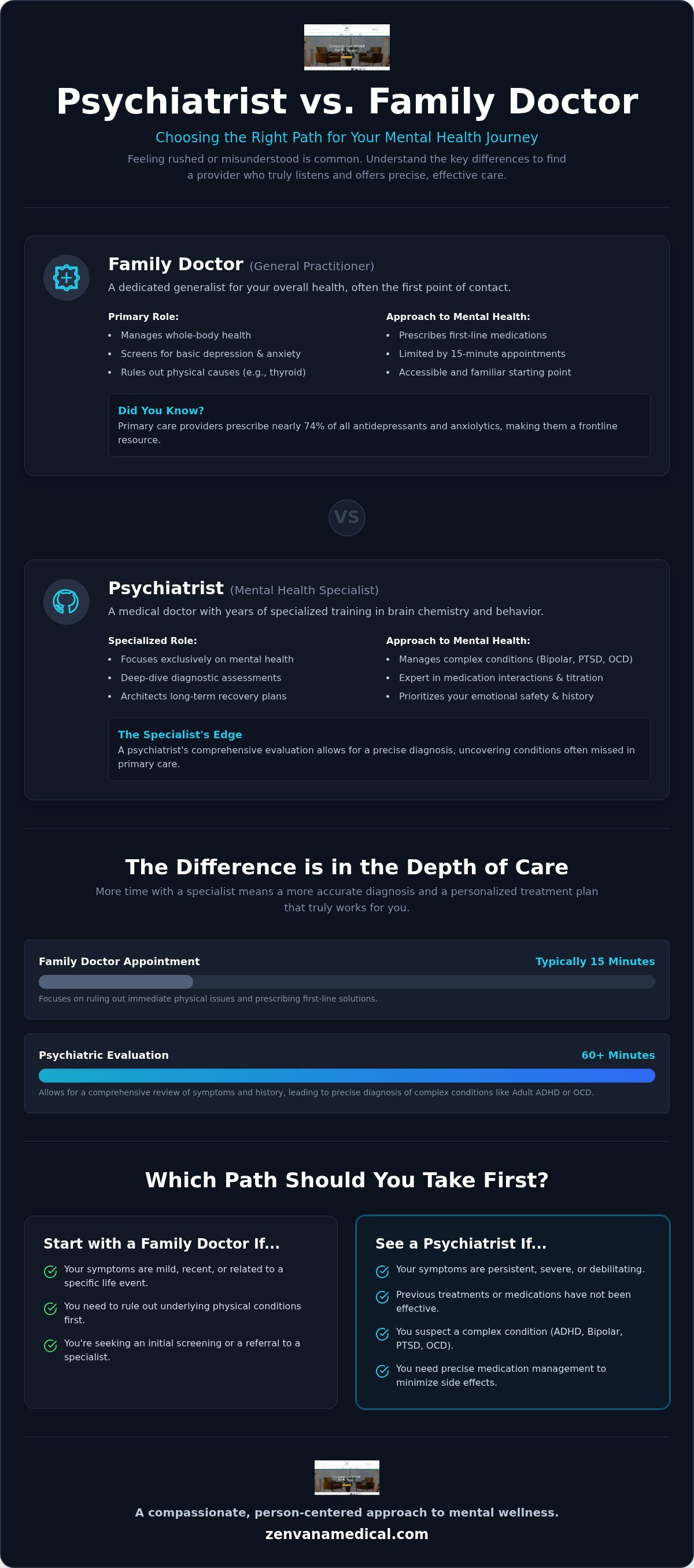
A family doctor is a dedicated generalist who looks at your body as a whole system. They manage everything from high blood pressure to the common cold. Because mental health symptoms like fatigue, heart palpitations, or brain fog often mimic physical ailments, your doctor is excellent at ruling out underlying issues like thyroid dysfunction or vitamin deficiencies. But their focus is wide, not deep. In many traditional medical settings, a family doctor is constrained by a 15-minute window. This limited time makes it difficult to peel back the layers of a complex emotional struggle, often leading to surface-level treatment where a first-line medication is prescribed without a deep exploration of your history.
A psychiatrist, conversely, is a medical doctor who has dedicated years of additional training to the medical specialty of psychiatry. They don't just see a diagnosis; they see the intricate dance of neurochemistry and life experience. They are the architects of your recovery, focusing exclusively on mental, emotional, and behavioral disorders. This specialized focus is vital when symptoms are persistent or when a previous treatment hasn't provided the relief you deserve.
What a Family Doctor Typically Handles
Your family doctor is often the front line of care. In fact, research shows that primary care providers prescribe nearly 74% of antidepressants and anxiolytics. They are a familiar and accessible resource for many, providing a safe starting point for mild or temporary symptoms that haven't yet become debilitating. Their role is to ensure your physical health isn't the hidden cause of your emotional distress.
Screening for basic depression or anxiety: They can use standardized tools to identify common symptoms during an annual physical.
Prescribing first-line medications: For mild, uncomplicated cases, they often start patients on well-known, foundational medications.
Ruling out physical causes: They order blood work to check for thyroid issues, anemia, or vitamin deficiencies that can mimic mental health conditions.
The Specialized Expertise of a Psychiatrist
A psychiatrist offers a level of precision that general medicine simply isn't designed to provide. This is where the experience of being heard and understood truly begins. While a primary care visit might feel rushed, a psychiatric evaluation is a comprehensive process that prioritizes your emotional safety and long-term stability. This specialized care is the commencement of a new path to health for those with complex needs.
Deep-dive diagnostic assessments: These initial evaluations often last 60 minutes or more, allowing for a thorough review of your history and symptoms.
Expertise in complex medication interactions: They understand how different psychiatric drugs interact with each other and your unique biology.
Management of chronic or treatment-resistant conditions: They are specifically trained to treat conditions like Bipolar Disorder, PTSD, or severe OCD that require specialized knowledge.
Psychiatrist vs. Family Doctor: Which One Should You See First?
Deciding between a psychiatrist vs family doctor for mental health is a deeply personal choice that begins with an honest look at your current experience. It's about more than just finding a prescription; it's about finding a provider who aligns with the depth of your needs. If you're feeling a temporary weight from a specific life event, your family doctor might be the most accessible starting point. However, if you've been carrying a heavy cloud for years, or if your symptoms feel like a tangled web of different emotions, a specialist's lens is often required for true clarity.
The choice often boils down to speed versus depth. A primary care visit is usually fast and efficient, which is helpful when you need immediate support for mild "blues." But mental wellness is rarely a straight line. If you suspect you're dealing with overlapping challenges, such as ADHD mixed with social anxiety, a generalist may only see the surface. Understanding the role of a psychiatrist helps you see why a specialist is better equipped to untangle these complexities. They have the time and training to look past generic labels and find a precise diagnosis that actually explains why you feel the way you do.
When to Start with Your Family Doctor
Your primary care physician is an excellent resource when you have a strong, trusting relationship already in place. They understand your physical health history and can quickly determine if your symptoms are tied to a specific life stressor, like grief or a career change. This path is also practical if your insurance requires a formal referral before you can see a specialist. They provide a vital safety net, ensuring that your physical and mental health are viewed together as you begin your journey.
When to Book a Psychiatric Evaluation Directly
There are moments when jumping straight to specialized care is the most compassionate choice you can make for yourself. If you've previously tried medications prescribed by a PCP that didn't work or caused harsh side effects, a specialist can offer a more nuanced approach. Direct psychiatric care is essential when symptoms like debilitating panic, PTSD flashbacks, or intense mood swings feel "out of control." Choosing a provider who focuses exclusively on medication management ensures your long-term safety through a plan tailored to your unique brain chemistry.
Ideally, these two providers shouldn't exist in silos. In a collaborative care model, your psychiatrist acts as the specialist architect of your mental health, while your family doctor remains your ally for physical wellness. They can work together, sharing insights to ensure your treatments are balanced and safe. This team-based approach offers a level of support that moves beyond surface-level care, giving you the best of both worlds as you commence your new path to health.
The Power of Specialized Diagnostics for Lasting Mental Clarity
Receiving a generic label like "depression" or "anxiety" from a general practitioner can sometimes feel like a dead end rather than a beginning. While these terms describe how you feel, they don't always explain why you feel that way. When weighing the benefits of a psychiatrist vs family doctor for mental health, the most significant advantage lies in the depth of the diagnostic process. A psychiatrist acts as a supportive guide, looking past surface-level symptoms to understand the intricate architecture of your brain chemistry and life history. This precision is what allows for the creation of a personalized treatment plan that fosters true emotional balance.
Specialists are trained to identify "masked" symptoms that often go unnoticed in a standard 15-minute primary care checkup. For example, what looks like chronic anxiety might actually be a secondary symptom of undiagnosed Adult ADHD or a specific form of OCD. By untangling these layers, a psychiatrist ensures you aren't just treating a symptom, but addressing the root cause. Resources for finding help for mental illnesses emphasize that an accurate, early diagnosis is the foundation for any successful recovery journey. This clarity is the commencement of a new path to health where you finally feel understood.
Detailed Assessments for ADHD and Focus Issues
There is a profound difference between "feeling distracted" by a busy lifestyle and living with clinical ADHD. A psychiatrist uses specialized tools, such as standardized scales or the QB test, to measure attention and impulsivity with objective data. This level of detail is essential because it prevents the "trial and error" approach to medication that many experience in primary care. Instead of a generic protocol, your care is tailored to your specific brain chemistry, ensuring that any intervention is both safe and effective for your unique needs.
Identifying PTSD and Complex Trauma
Healing from trauma requires more than just a prescription; it requires a compassionate, non-judgmental space where you feel safe to explore your experiences. Psychiatrists specialize in identifying the intersection between physical symptoms, like sudden panic attacks or insomnia, and deep-seated emotional triggers. They understand that the body often remembers what the mind tries to forget. Specialized psychiatric oversight ensures a safe and structured environment for healing from the deep-seated layers of trauma. By recognizing these complex patterns, a specialist helps you move beyond survival mode and toward a life of genuine peace and stability.
Medication Management: Why Precision Matters for Your Safety
Medication is often a vital tool in the healing process, but it's never a one-size-fits-all solution. Finding the "Goldilocks" dose, the precise amount that provides relief without overwhelming your system, is a delicate science known as titration. In the conversation of a psychiatrist vs family doctor for mental health, the specialist's role is to act as your expert ally in this process. They don't just look for a reduction in symptoms; they look for an optimization of your quality of life. This means moving beyond simply "surviving" on a prescription and transitioning into a state where you are truly thriving with optimized mental clarity.
Having a dedicated specialist allows you to navigate the nuances of side effects with confidence. Whether you're concerned about sleep changes, weight gain, or lingering fatigue, a psychiatrist has the clinical depth to adjust your plan with precision. They understand that your body's response to a medication is as unique as your fingerprint. By prioritizing your emotional safety and physical comfort, they ensure that the path to wellness doesn't feel like a series of harsh trade-offs.
The Risks of 'General' Prescribing
Primary care settings often rely on generic protocols because they lack the time to monitor complex neurochemistry. This can sometimes lead to a "prescription cascade," where additional medications are prescribed solely to treat the side effects of the first one. A specialist prevents this by focusing on the underlying neurotransmitter balance from the start. They understand how different classes of drugs interact with your specific biology, ensuring that your treatment remains streamlined and safe. This specialized oversight is crucial for avoiding the trial-and-error approach that often leaves patients feeling discouraged or over-medicated.
Long-Term Stability and Follow-Up Care
Follow-up appointments are the heartbeat of psychiatric care. These sessions aren't just for checking boxes or renewing refills; they are deep-dive conversations about your progress and safety. During a medication management session, your provider listens to the subtle shifts in your mood and energy, making incremental adjustments that prevent relapses before they happen. Consistent check-ins create a reliable safety net, allowing you to feel secure as you continue your journey. Learn more about our medication management services to see how this personalized attention can make a difference in your long-term stability.
If you're ready to find a plan that respects your unique needs and supports your autonomy, reach out to a specialist for medication management today. This is the commencement of a partnership where you are heard, understood, and supported every step of the way.
Finding Your Path to Wellness in Greenville and Simpsonville
Choosing the right partner for your mental health is one of the most significant decisions you'll ever make for your long-term well-being. In the Upstate, the conversation regarding a psychiatrist vs family doctor for mental health often centers on finding a balance between clinical expertise and genuine accessibility. At ZenVana Medical and Wellness Group LLC, we bridge this gap by offering specialized psychiatric evaluations within a space that feels as welcoming as a neighbor's home. We don't believe in sterile, rushed appointments; instead, we prioritize a nurturing environment where your emotional safety is the foundation of every conversation.
Our approach is built on the belief that a collaborative partnership is the true key to recovery. You are the expert on your own life, and we act as your supportive guide, providing the medical clarity needed to navigate complex symptoms. Whether you prefer the convenience of telehealth from your home in Simpsonville or an in-person visit in Greenville, we offer the flexibility that fits your unique lifestyle. This is the commencement of a new path to health, designed to move at a pace that feels manageable and respectful of your autonomy.
Compassionate Care Close to Home
We are deeply committed to serving the Greenville and Simpsonville communities with a localized, culturally aware touch. Our team understands the nuances of our region, and we take pride in offering support that honors your background, including the ability to communicate in specific regional dialects to ensure you feel fully understood. By creating a true "mental health home," we ensure you aren't just another chart number. We support individuals across all life stages with dignity, providing specialized care that respects the wisdom of our older populations and the unique challenges of younger generations without bias or judgment.
Taking the First Step Toward Healing
Preparing for your initial psychiatric evaluation can help ease any natural anxiety you might feel about the process. We recommend gathering a brief history of any previous treatments and a list of current medications to bring to your first visit. This information acts as a roadmap, allowing us to spend more time focusing on your current goals and less on paperwork. The experience of being heard and understood starts the moment you reach out. You don't have to navigate these complexities alone. Start your journey to mental clarity with ZenVana Medical and Wellness Group LLC today and discover the difference that personalized, specialized care can make for your future.
Commencing Your New Path to Mental Clarity
Choosing between a psychiatrist vs family doctor for mental health is the first step in taking ownership of your long-term well-being. While your primary doctor is a vital ally for general health, a specialist provides the diagnostic depth and precise medication management needed for complex conditions like ADHD, PTSD, or chronic anxiety. By moving beyond surface-level labels, you open the door to a treatment plan that actually respects your unique neurochemistry and life experience. You deserve a provider who sees the person, not just the symptoms.
At ZenVana, we provide a compassionate, non-judgmental environment where the experience of being heard and understood is our core promise. Whether you choose telehealth or in-person visits in Greenville and Simpsonville, our specialized focus on anxiety and ADHD ensures you receive care that is both expert and deeply personal. You don't have to navigate these feelings alone. You deserve a collaborative partner who listens with intent and acts with clinical wisdom to support your autonomy.
Schedule Your Initial Psychiatric Evaluation in Greenville today. This is the commencement of your new path to health, where every step is taken with dignity and unwavering support.
Frequently Asked Questions
Can a family doctor diagnose ADHD in adults?
Yes, a family doctor can legally diagnose ADHD, but they often refer patients to specialists for a more comprehensive assessment. Adult ADHD is complex and frequently masked by other conditions like anxiety or chronic stress. A psychiatrist uses specialized diagnostic tools and standardized scales to look deeper than a standard physical exam allows. This ensures your symptoms are correctly identified rather than being attributed to a more generic condition.
Is a psychiatrist more expensive than a primary care physician?
Generally, a specialist visit involves a higher cost than a general practitioner due to the depth of expertise and length of the appointment. When comparing a psychiatrist vs family doctor for mental health, specialists often have higher insurance copays or self-pay rates. However, many find that the precision of a specialized diagnosis prevents the long-term expense of ineffective treatments and multiple follow-up visits caused by medication trial and error.
Do I need a referral from my family doctor to see a psychiatrist in Greenville?
Whether you need a referral depends entirely on your specific insurance plan. Many PPO plans allow you to book a psychiatric evaluation directly without seeing a primary care provider first. However, some HMO plans require a formal referral to cover the cost of specialist care. It is always best to verify your benefits with your insurance carrier or check your 2026 plan documents before scheduling your initial visit.
What happens if my family doctor's medication isn't working?
If your current medication causes harsh side effects or fails to provide relief, it is often the right time to consult a specialist. A psychiatrist can perform a more nuanced evaluation of your neurochemistry to adjust your treatment plan. They specialize in titration and complex drug interactions, helping you move past the frustration of ineffective prescriptions toward a personalized plan that supports your individual path to wellness and stability.
How long does a typical psychiatric evaluation take compared to a doctor's visit?
A comprehensive psychiatric evaluation is significantly longer than a standard primary care visit. While a family doctor might only have 15 minutes to discuss your mental health during a physical, an initial psychiatric assessment typically lasts 60 minutes or more. This extended time is essential for building trust, exploring your complete history, and ensuring that you feel heard and understood before any treatment decisions are made.
Can a psychiatrist provide therapy as well as medication?
Yes, psychiatrists are trained in psychotherapy, though many in modern practice focus primarily on medication management. Many providers work within a collaborative model, providing the biological expertise while partnering with dedicated therapists for behavioral support. This team based approach ensures that every aspect of your well-being is addressed, combining clinical precision with the emotional support necessary for a truly holistic and person centered recovery journey.
Is telehealth as effective as in-person psychiatric care for anxiety?
Research and clinical experience show that telehealth is highly effective for treating anxiety and other mental health conditions. Virtual visits allow you to receive expert care from the comfort and safety of your own home, which can be especially helpful if social anxiety makes office visits feel overwhelming. You receive the same level of clinical expertise and personalized medication management without the added stress of a commute or a busy waiting room.
What should I do if I am having a mental health crisis?
If you are experiencing a mental health emergency or are in immediate danger, please call 988 or go to the nearest emergency room. Outpatient psychiatric offices are designed for ongoing care and medication management rather than immediate crisis intervention. For urgent support, emergency services and crisis hotlines provide the 24/7 assistance needed to ensure your safety before you transition back to a long term outpatient wellness plan.


Comments